Knee pain that has lasted more than six weeks behaves differently from the ache after a long walk. Rest stops fixing it. It starts making small decisions for you: which chair you choose, whether you take the stairs, how far you will go on an uneven path before turning back.
The useful part is that lasting knee pain in adults comes from a fairly short list of causes. Where the pain sits, and when it is at its worst, narrows that list a long way before anyone orders a scan.
The usual causes in adults
Osteoarthritis
The smooth cartilage lining the joint thins, and the bone underneath becomes sensitive. The pain is deep and aching, worse after activity and towards the end of the day. Stiffness after sitting loosens within five or ten minutes of walking. Both knees are often involved, though rarely to the same degree. Treatment starts with load management and strengthening, and knee replacement is considered only much later.
Meniscus and cartilage injury
The menisci are two wedges of tough cartilage that spread load across the joint. They fail in two quite different ways: a twist on a planted foot in a younger knee, or slow fraying in an older one. Pain along the joint line, catching, and swelling that appears the day after activity are typical.
Ligament problems
Ligament injuries usually begin with one specific incident and swelling within an hour. Afterwards the knee feels unreliable when you turn or pivot.
Patellofemoral (kneecap) pain
This is pain at the front of the knee, around or under the kneecap. It is worse going downstairs, worse squatting, and worse after sitting with the knee bent for a long time, such as a long drive or flight. It often follows a recent increase in running, cycling, or hill walking.
Referred pain from the hip or lower back
Hip arthritis frequently announces itself as knee pain, with little or no pain at the hip itself. Irritated nerves in the lower back can do the same. If the knee looks normal and moves well but still hurts, the source may be higher up.
Inflammatory and metabolic causes
Gout, rheumatoid arthritis, and joint infection behave unlike mechanical problems. They tend to cause heat, swelling, and pain that is not clearly linked to activity. Gout often arrives suddenly overnight.

What the pattern of your pain suggests
- Pain going down stairs, or standing up from a low seat, points towards the kneecap joint and the front of the knee.
- Deep pain that wakes you at night, or that is present while you sit still, often means more advanced joint surface damage, though pain that is constant and unrelated to activity also needs assessment to rule out other causes.
- A knee that truly locks, stopping part-way and refusing to straighten, suggests something physically catching inside the joint.
- Giving way can mean a ligament problem, but more often it is the thigh muscle switching off because the joint is painful.
- Swelling within an hour of an injury suggests bleeding inside the joint, which is more concerning than swelling that creeps in the next day.
- Groin pain alongside knee pain moves suspicion towards the hip.
What a first consultation involves
A specialist will spend most of the appointment on your history and the examination, not on imaging. Expect questions about how the pain began, what you can no longer do, night pain, swelling, giving way, and locking.
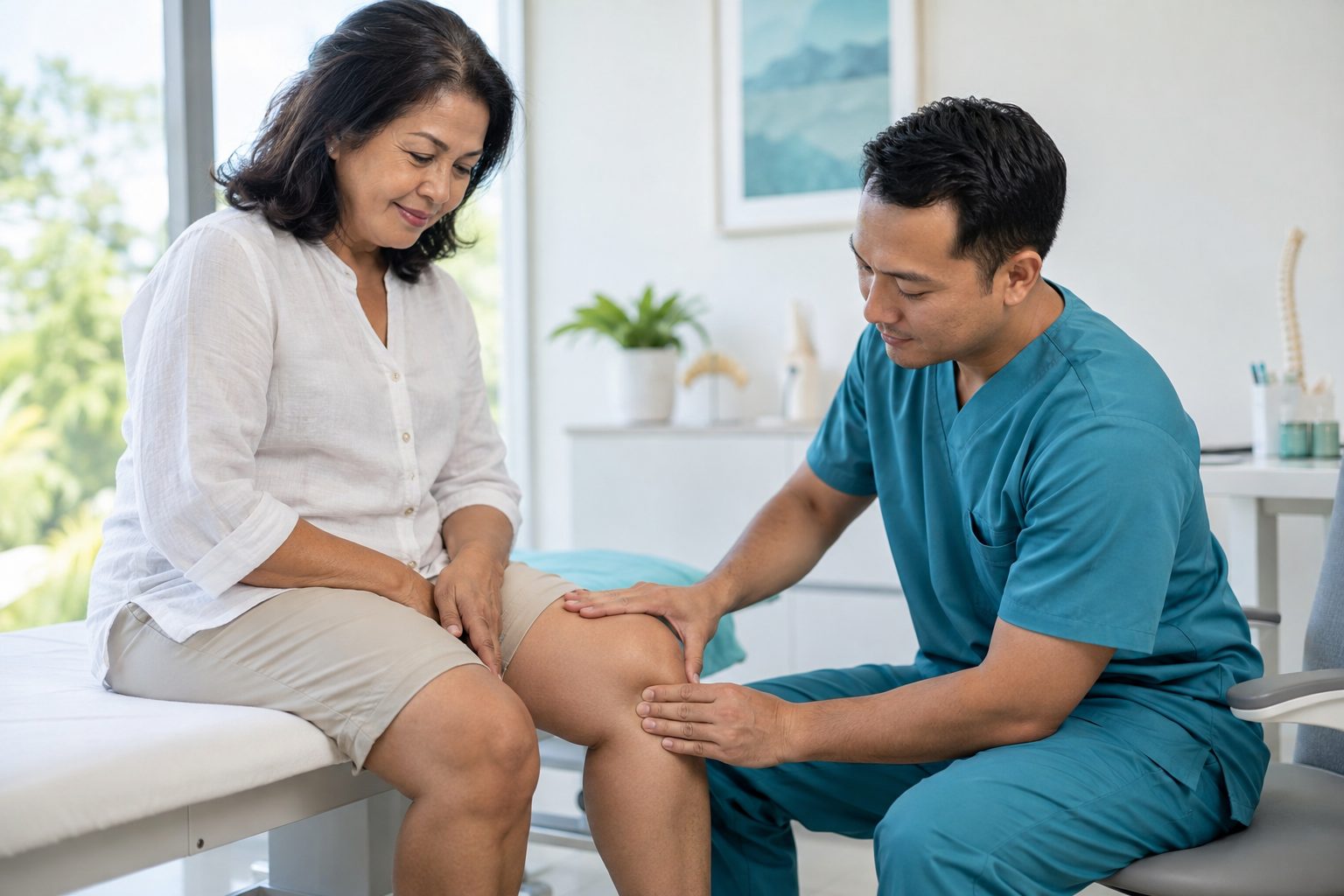
The examination usually includes watching you walk, checking whether the leg is bowed or knock-kneed, measuring how far the knee bends and straightens, and pressing along the joint line. Hand tests check for fluid in the joint, ligament stability, and meniscal irritation. The hip is nearly always moved and rotated too, to confirm it is not the source.
When imaging helps
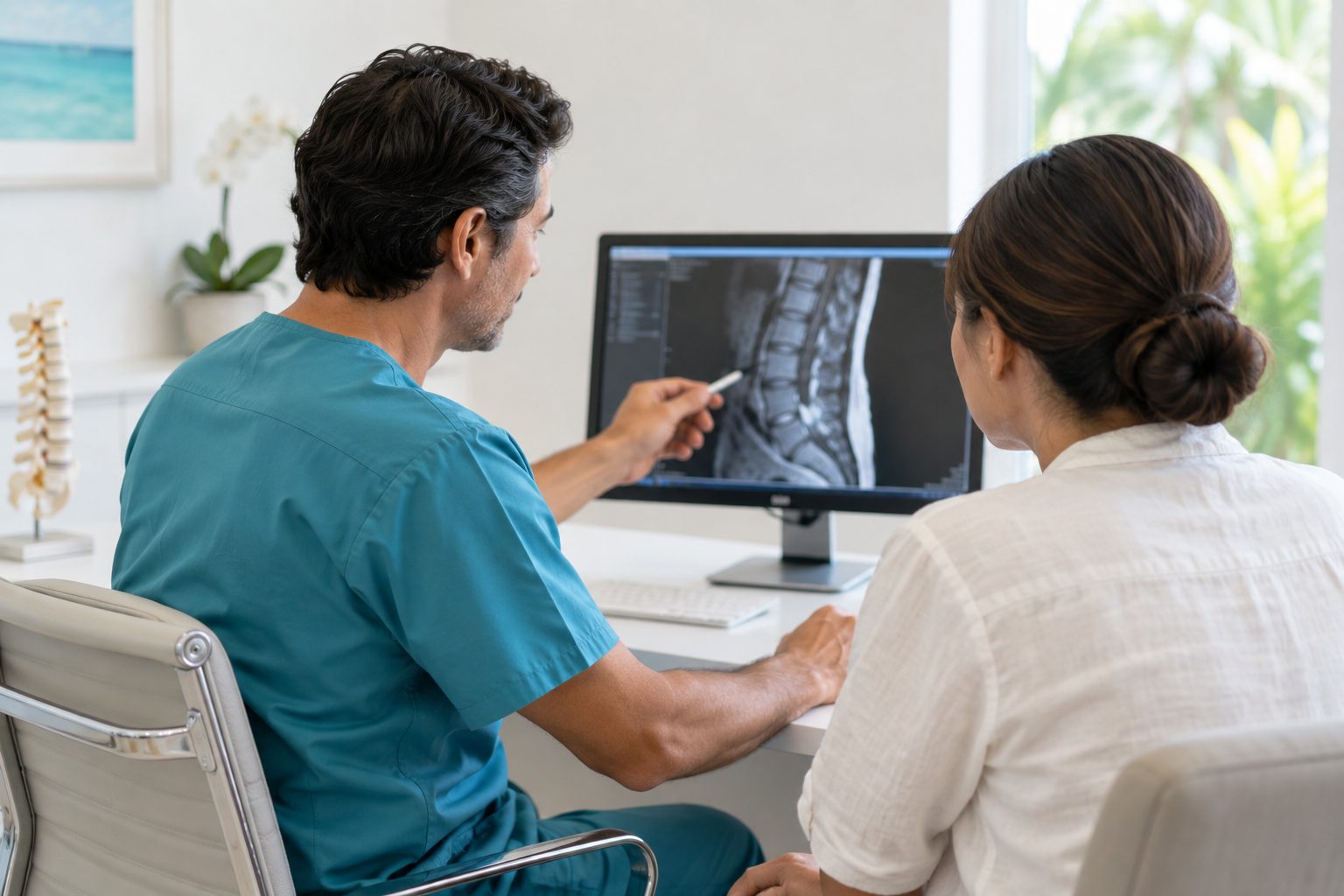
An X-ray taken standing is the first image in most adult knees, because the joint space only narrows visibly when the joint is loaded. A lying-down film can look falsely reassuring.
MRI earns its place when a soft tissue answer would change the plan, such as a suspected ligament tear or a locked knee. It is far less useful as a first test in an older arthritic knee, because it will often report tears and degeneration that are not the reason you are in pain. Blood tests are added when gout, inflammation, or infection is possible.
Warning signs that need urgent attention
Most knee pain can wait for a routine appointment. These cannot.
- A hot, very swollen knee with fever or chills needs same-day assessment, because joint infection is treated as an emergency.
- Being unable to put weight through the leg after an injury, or a knee that collapses when you try.
- Visible deformity after trauma, or a kneecap that has shifted out of position and stayed there.
- Calf swelling, tenderness, or redness, particularly after surgery, injury, or a long flight. With breathlessness or chest pain, treat it as an emergency.
- A foot below the painful knee that is cold, pale, or numb.
- A knee stuck bent that you cannot fully straighten, which should be assessed within days.
- Bone pain that is constant and unrelated to activity, especially with unexplained weight loss, night sweats or fever.
Frequently asked questions
How long should knee pain last before I see a doctor?
Six weeks without improvement is a reasonable trigger for assessment. Go sooner if the knee swelled immediately after an injury, if it locks or gives way, or if you cannot bear weight on it.
Do I need an MRI for knee pain?
Usually not as the first step. A standing X-ray and a careful examination answer most questions, and an MRI is added when the result would genuinely change what is done next.
Can I keep exercising with knee pain?
In most non-injury cases, yes, with adjustment rather than rest. Cycling, swimming, and walking on flat ground usually stay comfortable while deep squats, slopes, and stairs are reduced for a while.
Is knee pain just a normal part of getting older?
Joint changes are common with age, but constant pain, night pain, and shrinking activity are not something to accept. Many causes respond well to treatment that is not surgery.
Getting a clear answer
Knee pain that has settled into your routine deserves a proper look rather than another month of guessing. A consultation should give you a working diagnosis, an explanation of what is happening inside the joint, and a plan that usually begins well short of surgery. Our orthopaedic specialists consult at hospitals across Bali, and you are welcome to book an appointment or send a message on WhatsApp first.
This article is general information, not medical advice. Any persistent or severe symptom should be assessed by a qualified orthopaedic specialist in person.